
Hosting & Operations
Florida Vacation Rental Cleaning and Sanitation Rules
What Florida's lodging statute, DBPR rules 61C-1 and 61C-3 and DBPR's vacation rental guide require for linens, dishes, kitchens and pests between guests.
Free rental projection — about a minute
Step 1 of 4 · Address
What’s the address of your property?
We’ll pull real, comparable Florida listings to build your projection.
Free, no obligation. Prefer to talk? Call (321) 321-2348.
Florida’s sanitation rules for vacation rentals come from three places: Chapter 509 of the Florida Statutes, the Division of Hotels and Restaurants’ rules in Florida Administrative Code chapters 61C-1 and 61C-3, and DBPR’s own guide to vacation rentals. Several statutory provisions exempt vacation rentals, but the guide still sets clear standards for linens, dishes and pests between guests.
Which sanitation rules apply to a vacation rental?
Section 509.221 sets the statutory sanitary rules for licensed lodging. Every licensed establishment must be properly lighted, heated, cooled and ventilated and run with strict regard to guests’ health, comfort and safety. Each bedroom needs an opening to the outside or mechanical ventilation, and the operator must take effective measures against vermin, fumigating or treating any infested room until the vermin are gone.
Subsection (9) carves out vacation rentals from three parts of the section: public bathroom requirements, the towel and soap rule, and the bed linen rule. So the statute alone does not dictate how often a vacation rental changes sheets. DBPR’s guide fills that gap, as the next section shows.
Rule 61C-1.004 adds general requirements for all public lodging:
- Effective vermin control, with buildings rodent-proofed and ventilation windows screened at no less than 16 mesh to the inch, unless other effective vermin control is used
- Poisonous and toxic materials stored and used under Chapter 7 of the Food Code
- Building components, attachments and fixtures kept in good repair, clean and free of obstructions
- Attics, laundry rooms and storage rooms kept clean and free of debris and flammables
- Halls, entrances and stairways clean, ventilated and well lighted, with railings on all stairways and around porches and steps
- Heating and ventilation kept in good repair or able to hold 68 degrees Fahrenheit, a rule that does not apply to common areas of vacation rental condominiums
The bathroom subsection of 61C-1.004 exempts vacation rentals.
What are the linen and bedding requirements?
DBPR’s vacation rental guide lists these requirements:
- If provided, bedding and linens must be clean, unworn and properly stored.
- Mattress pads, sheets and blankets must be sized so the entire sleeping area of the mattress is covered.
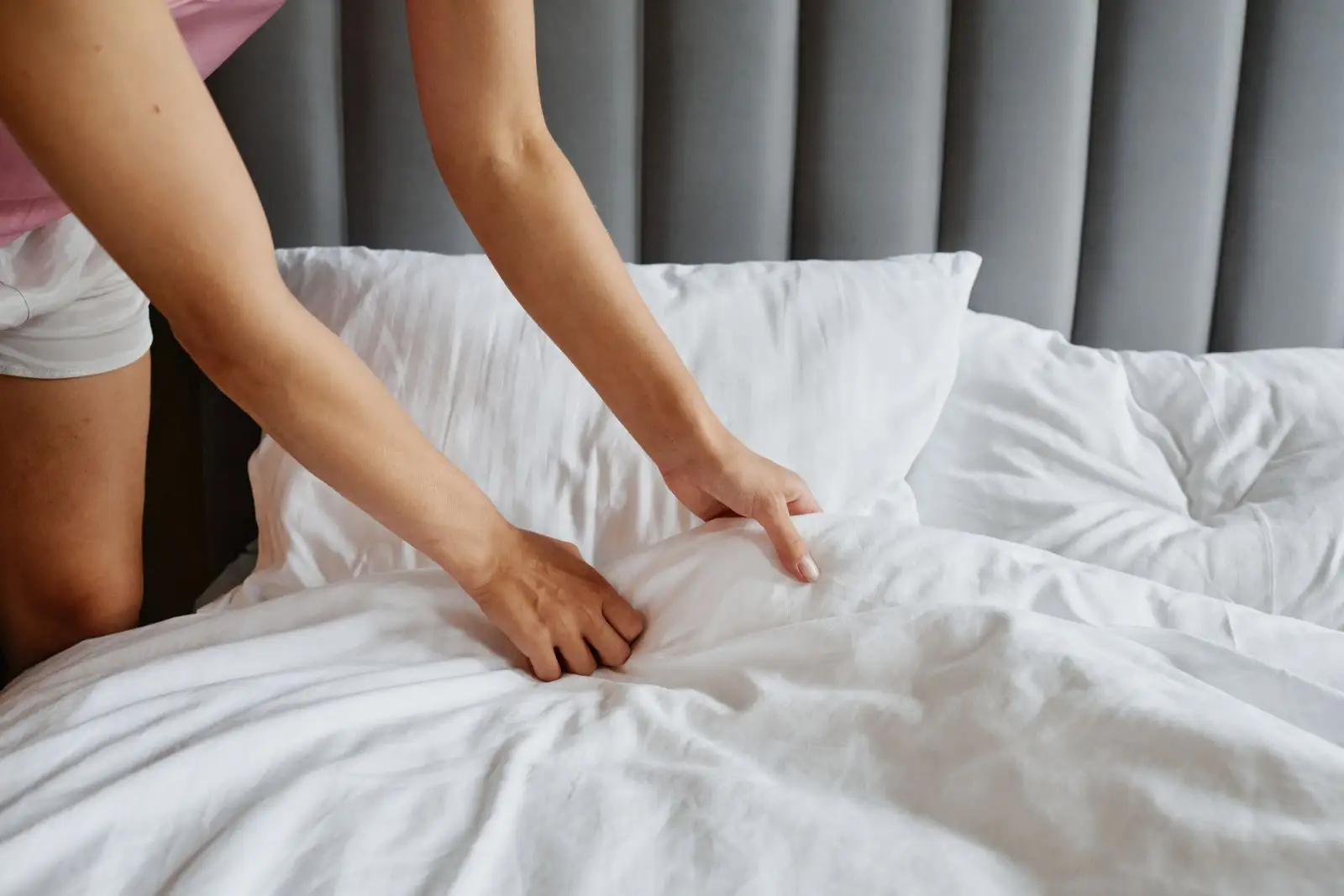
- Sheets and pillowcases must be in good condition, and cleaned and changed between each guest or once a week, whichever occurs first.
- Mattresses, comforters and pillows must be thoroughly aired, disinfected and kept clean.
- If soap is provided, it must be individually wrapped bars or liquid soap in a dispenser.
- Baby cribs provided to guests must meet Consumer Product Safety Commission standards.
The guide also says to keep the unit clean, safe and in good physical condition, and free of vermin.
Do dishes have to be sanitized?
Rule 61C-3.001(1) applies Chapter 4 of the Food Code to glassware, tableware and utensils in public lodging, and lets an establishment that cannot comply post a notice instead. Subsection (7) exempts vacation rentals from subsection (1), and says an establishment that opts to provide those items must comply.
DBPR’s guide states the practical rule. If you provide dishes and glassware, you must sanitize all of them between guests, and proper warewashing requires a three-compartment sink or a commercial dishmachine. A vacation rental without those facilities must post the division’s Notification of Exception to Sanitization Requirements. The rule’s version of the notice tells guests the items were cleaned with ordinary household dishwashing facilities and have not been sanitized according to federal and state standards for public food service establishments.
What about the kitchen, ice and locks?
Rule 61C-3.001 sets standards that do apply to vacation rentals:
- Kitchen (subsection 2): appliances and refrigerators kept clean, free from odors and in good repair, refrigerators properly drained, kitchens ventilated, at least 10 foot candles of light, sufficient and suitable cooking utensils, adequate garbage receptacles, and a kitchen sink with hot and cold running water under pressure.
- Ice (subsection 3): ice buckets and containers made of smooth, nonabsorbent material, kept clean, and cleaned and sanitized between each guest, or fitted with a single-service liner changed at least daily.
- Locks (subsection 4): at least one approved locking device on outside and connecting doors that a non-master key cannot open; a sliding chain or hook and eye does not count.
- Balconies (subsection 5): a building of three or more stories files a Certificate of Balcony Inspection every three years, unless the balconies and stairs are condominium common elements, as DBPR’s guide explains.
Who is responsible, and what are the penalties?
Rule 61C-1.002 puts responsibility on the licensee for a single license, and on the licensed agent for a group or collective license while the home is listed under that agent. The licensee or operator must meet an inspector at the property with keys on request. Vacation rentals are not routinely inspected but must be made available to the division on request under section 509.032(2)(a).
Rule 61C-1.005 sets standard fines. A basic violation costs $150 to $300 on a first offense, $250 to $500 on a second, and $350 to $1,000, suspension or both on a third. An intermediate violation runs $200 to $400, $375 to $750, then $550 to $1,000, suspension or both. Offenses count as repeats when a prior final order was filed within the previous 24 months.
How do our cleaning teams run a turnover?
Florida Hosts uses its own cleaning teams. Each turnover follows a detailed checklist and ends with a quality check before the next guest arrives. Every guest gets fresh linens and restocked essentials, which meets DBPR’s between-guests linen standard without relying on the once-a-week fallback.
What the cleaners find goes to our own maintenance staff, who handle AC, pools, plumbing and repairs. That matters under 61C-1.004, which expects building components and fixtures to be kept in good repair, and under section 509.221, which expects the home to be kept cooled and ventilated.
How Florida Hosts helps
Our own cleaning and maintenance staff across Florida run turnovers and repairs, our team handles guest communication 24/7, and we offer licensing and registration help with the DBPR license, local registration and tax accounts. Short-term management is 18–25% of booking revenue, quoted in writing; see our services and pricing, or ask for a free rental projection within one business day.
This guide is general information and not legal or tax advice; confirm current requirements with DBPR’s Division of Hotels and Restaurants or a professional.
Written by the Florida Hosts team
We're a vacation rental management company working across Florida. We manage 350+ homes, have earned 10,000+ guest reviews, and bring 10 years of hands-on hosting experience to every guide we publish. More about Florida Hosts →
Questions about your specific property?
Talk to a real person on our team — straight answers, no scripts.
Free projection · about a minute
What could your property earn?
Tell us about it and we'll build a free, comps-based projection — a real person, not an algorithm, back to you within one business day.
Free, no obligation. Prefer to talk? Call (321) 321-2348
Step 1 of 4 · Address
What’s the address of your property?
We’ll pull real, comparable Florida listings to build your projection.
Common Questions
Frequently Asked Questions
Do Florida vacation rentals have to change sheets between guests?
DBPR's guide for vacation rentals says that if linens are provided, sheets and pillowcases must be cleaned and changed between each guest or once a week, whichever comes first. The statutory linen rule in section 509.221(6) does not apply to vacation rentals under section 509.221(9), but the division's guide still sets that standard.
Do I have to sanitize dishes in a Florida vacation rental?
DBPR's guide says that if you provide dishes and glassware you must sanitize them between guests, using a three-compartment sink or commercial dishmachine. A rental without those facilities must post the division's notice telling guests the dishes have not been sanitized to public food service standards.
Does DBPR inspect vacation rentals?
Vacation rentals are not on the division's routine inspection schedule, but section 509.032(2)(a) requires them to be made available to the division on request. Under Rule 61C-1.002, the licensee or operator must meet the inspector at the property with keys when asked.
What are the fines for a sanitation violation?
DBPR's disciplinary guidelines in Rule 61C-1.005 set a fine of $150 to $300 for a first basic violation and $200 to $400 for a first intermediate violation, rising for repeat offenses within 24 months, up to license suspension.
Who is responsible if a managed home fails an inspection?
Under Rule 61C-1.002, the licensee is responsible on a single license. On a group or collective license, the licensed agent, meaning the management company the owner has authorized to rent the home, is responsible for violations while the home is listed under it.
Looking for more owner guides?
← Back to all resourcesRelated guides
Keep reading
Florida Guest Register and Occupancy Rules for Rentals
What Florida's guest register law (§509.101) requires, the other Chapter 509 duties a vacation rental carries, and how local occupancy limits are set.
Read the guide → Hosting & OperationsFlorida Vacation Rental Advertising Rules: What Listings Need
What Florida law says about vacation rental listings, why there is no statewide license-number rule, and which local codes require numbers in every ad.
Read the guide → TaxesDo Airbnb and Vrbo Collect Florida Rental Taxes? (2026)
Which Florida taxes Airbnb and Vrbo collect and remit, county by county, from their own help pages, and which taxes and filings stay with the owner.
Read the guide →See what your home could earn
Get a free, no-obligation rental projection from people who actually manage homes in your neighborhood.
Free · comps-based · delivered within one business day.